The Information Environment is Hostile to Cognition
Besides being simply overwhelming, it has been optimized for manipulation, deception, and confusion. People are making worse decisions, and the overall system is incentivized against the public good. At its most extreme state, decisions are being made which are, in essence, unforced errors leading to existential risk.
Mindshield is the result of deep interest in cognitive security and epistemic uplift, exploring the idea of how to protect human agency into the future. As software, it seeks to automatically detect manipulation, increase human agency by improving the information environment, and surface opportunities for cooperation. The overall effort is to minimize the cost of noise, maximize signal and create more opportunities for user (and humanity) to make better decisions.
More examples are below. For the full discussion of the theory of problem and the change to resolve this, please read more here.
Better decisions
Dark patterns are rife in the digital commons that we live in: a variety of psychological attacks such as false scarcity (buy this before it runs out!), social bias manipulation (everyone else likes this, so will you!), anchoring (creating a false opinion of what is "normal"). As AI becomes more common and human content becomes scarcer, we should expect the cost of this attack to drop to almost zero.
One way to see this are the common tactics used in hotel and booking sites, that a number of these tactics (urgency and anchoring are shown below).
A simple way to make them and many other forms of cognitive attack less effective is via the principle of transparency: simply by exposing the information, it reduces the asymmetry of information and thus provides key information that can assist the user.
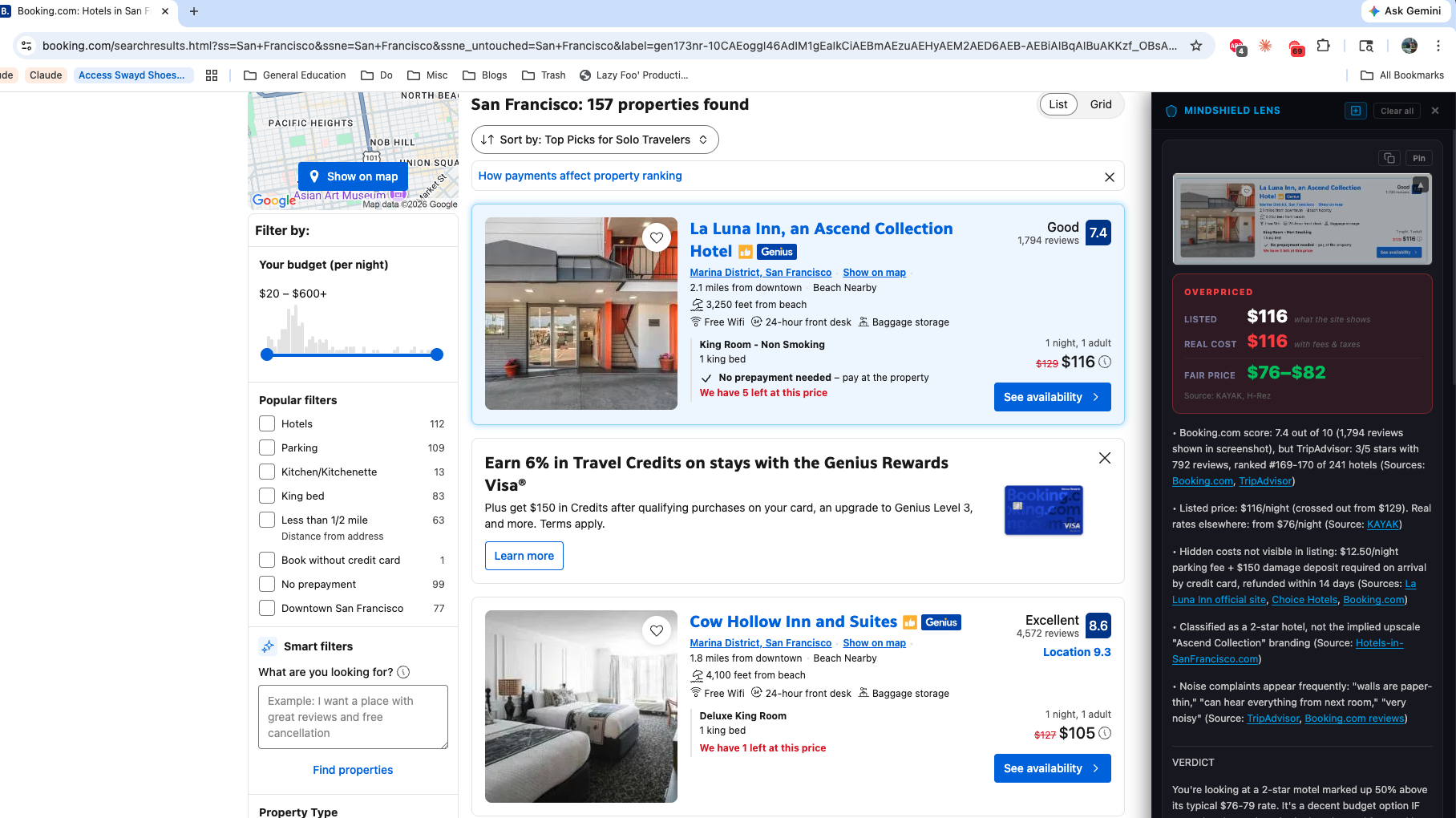
Booking.com shows a "deal" at $116/night on a hotel where KAYAK shows a fair range of $76–$82. Mindshield surfaces hidden costs: $12.50/night parking, $150 damage deposit, and thin-wall noise complaints buried in reviews, which helps the user make a better decision. The idea is that by providing immediate value to the user, this becomes adopted for other forms of epistemic improvement.
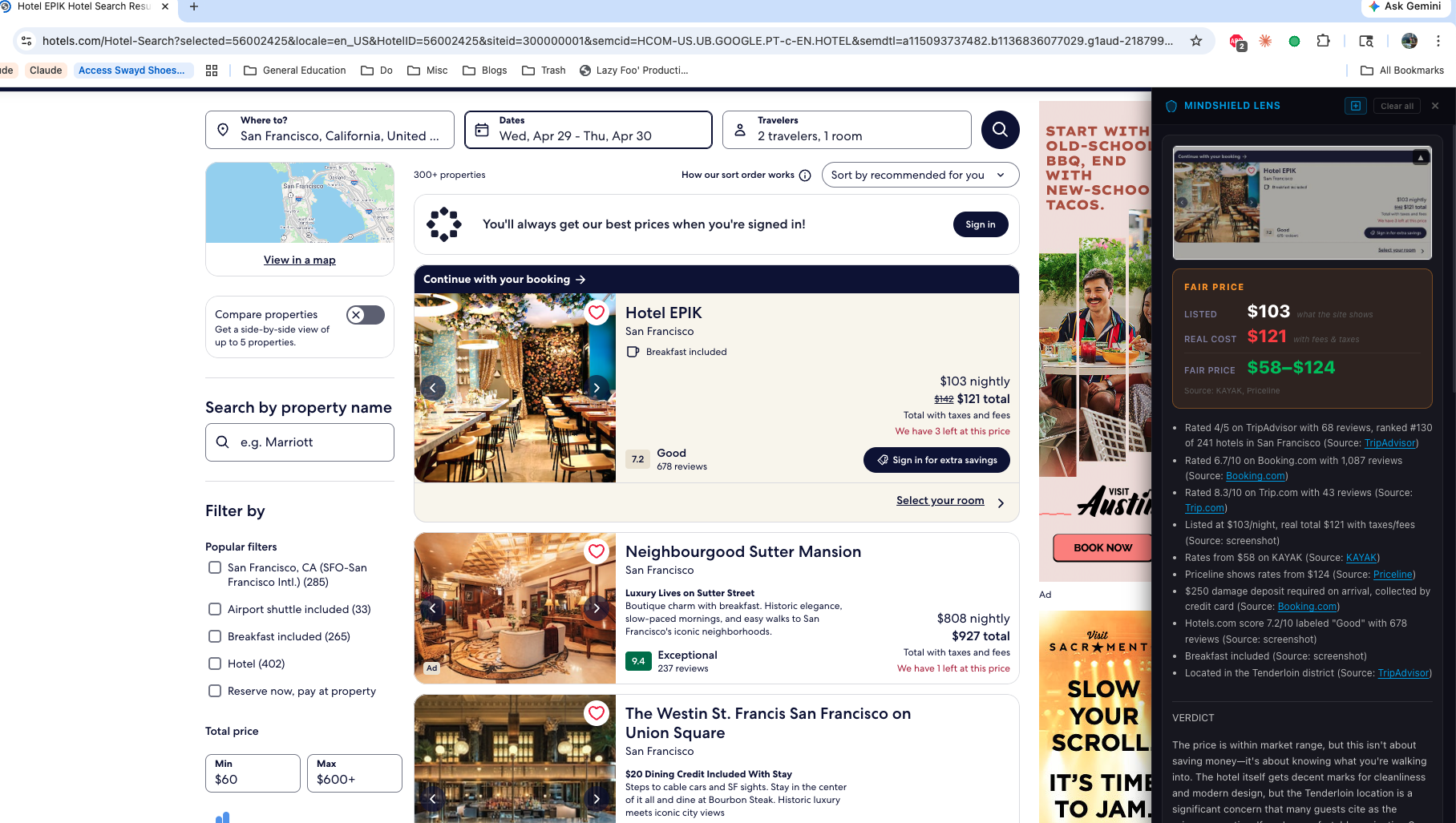
Hotels.com shows a fair $103/night (market range $58–$124). Mindshield still provides additional information by flagging a $250 damage deposit and notes the Tenderloin location (infamous for its dangers) so that the user knows what he or she may be walking into.
Scams
Marketplace sellers and group chat operators use urgency, off-platform requests, and fake authority to steal money. Mindshield flags the patterns.
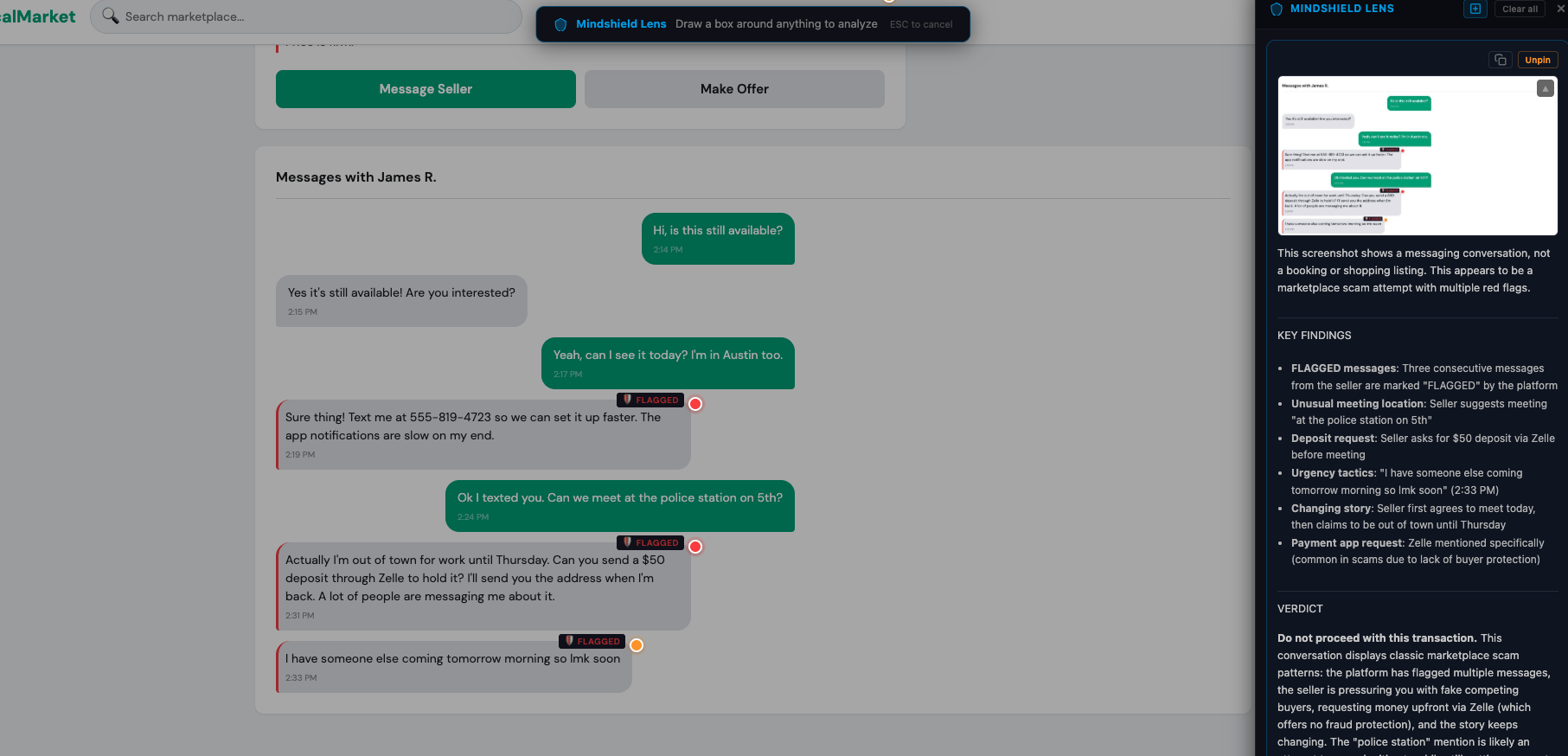
A seller agrees to meet, then suddenly needs a $50 Zelle deposit because they're "out of town." Mindshield flags three messages: the off-platform number, the deposit request, and the fake urgency.
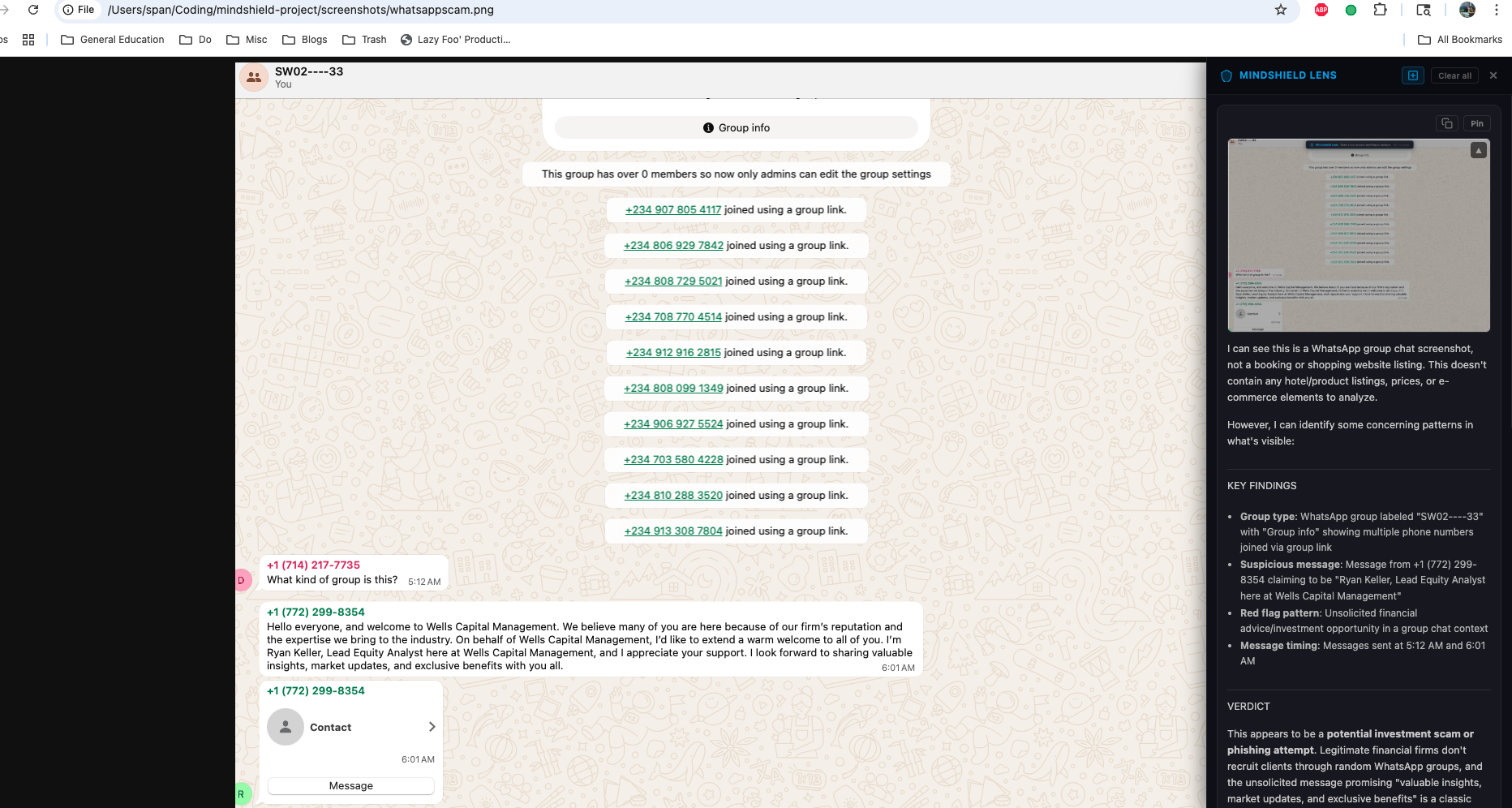
A WhatsApp group posing as "Wells Capital Management" with a classic investment pitch. Mindshield identifies it as a fraud pattern.
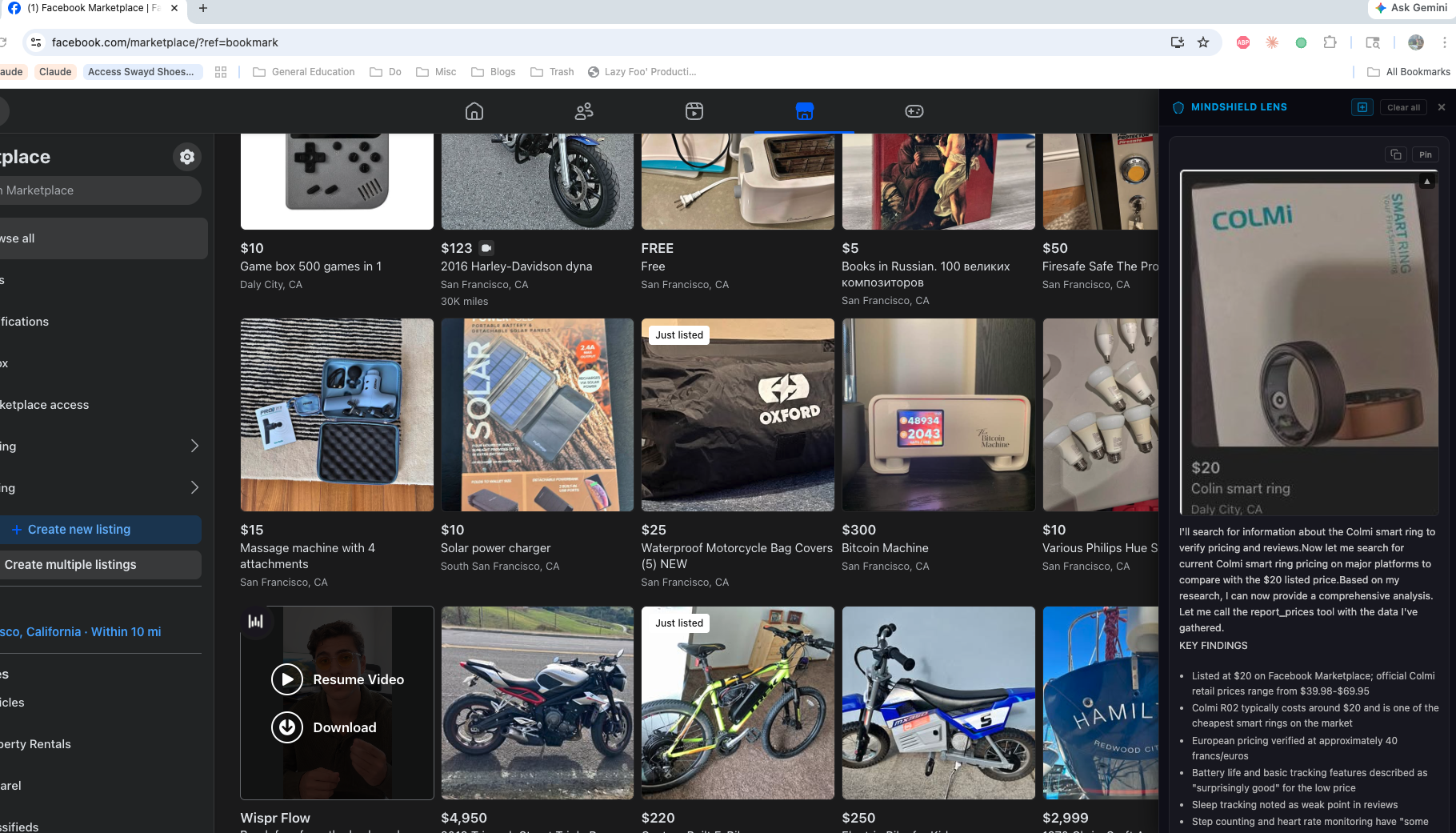
Facebook Marketplace — Mindshield researches items before you buy, surfacing brand info and what to verify.
No False Positives
Mindshield doesn't just warn. When a conversation or listing checks out, it tells you that too.
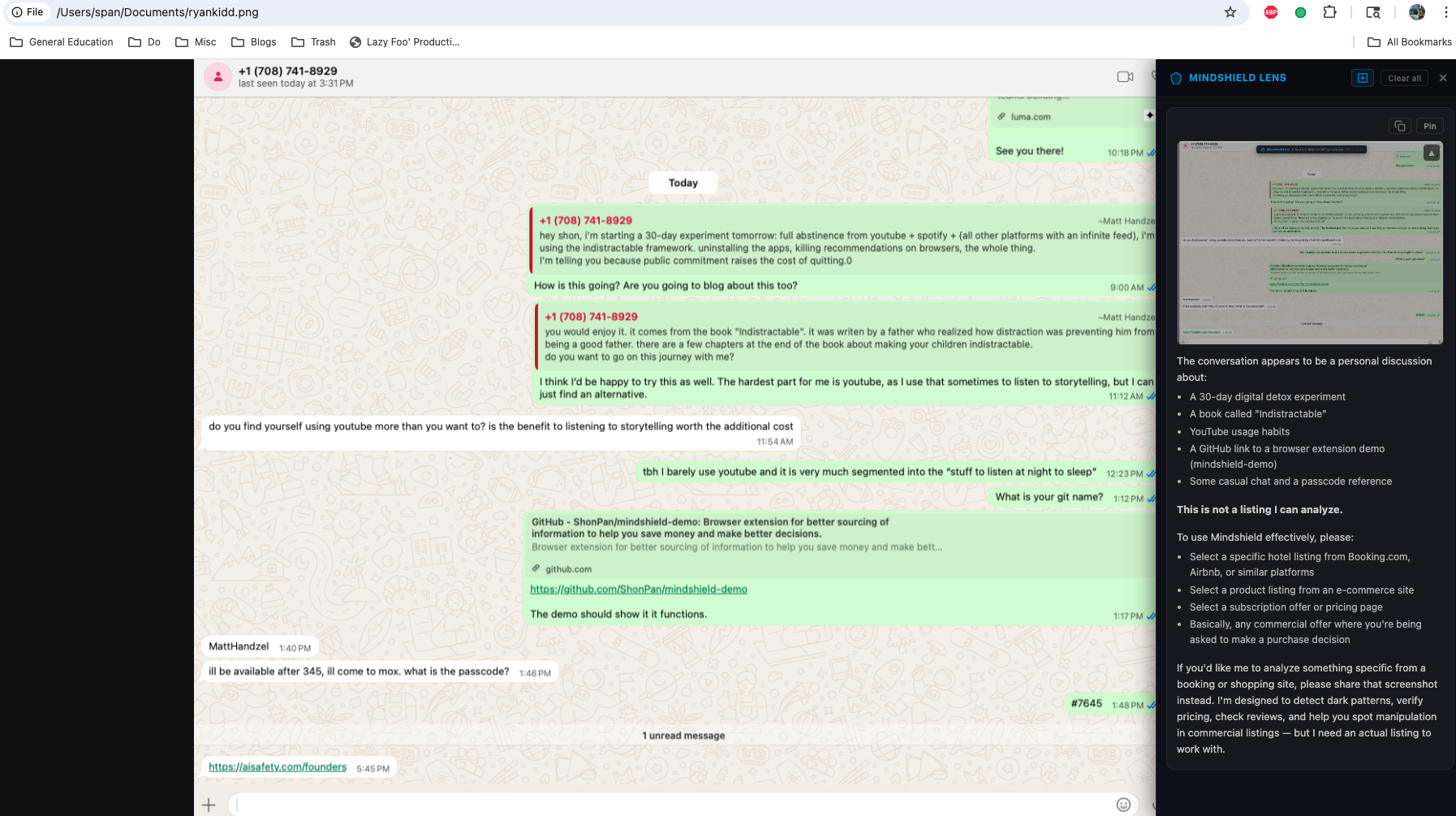
A normal conversation — Mindshield confirms no scam patterns detected.
Full Demo
Two minutes of Mindshield in action.
Try it
Mindshield is free. It runs in Chrome.
- Download mindshield-extension.zip.
- Unzip it. Open
chrome://extensionsand turn on Developer mode. - Click Load unpacked and select the folder.